Future First Drafting strengthens scan-to-model workflows with Tekla Structures and Trimble scanning
Posted by BuildingPoint Australia | October 2026 | 7 min read

Posted by BuildingPoint Australia | October 2026 | 7 min read
Future First Drafting, based in Adelaide, South Australia, has built its drafting workflow around Tekla Structures for close to two decades. For founder Lee Cavell, Tekla is the platform he relies on every day to model everything from small gates and handrails through to warehouses, multi-storey structures and complex retrofit steelwork.
More recently, Future First Drafting has added a Trimble X-series scanner to its workflow, helping turn challenging site conditions into usable, accurate model data. By combining site scans with Tekla Structures, the business can work with greater confidence, reduce manual measuring, and take on projects that may previously have been too difficult, time-consuming or risky to approach.
Lee’s background in the steel industry informs the way Future First Drafting approaches detailing, with a focus on producing models and drawings that are practical for fabrication, review and installation.
Tekla Structures supports a wide variety of Future First Drafting’s work, including stairwells, handrails, balustrades, residential slab checks, warehouses, rebuilds and structural steel projects.
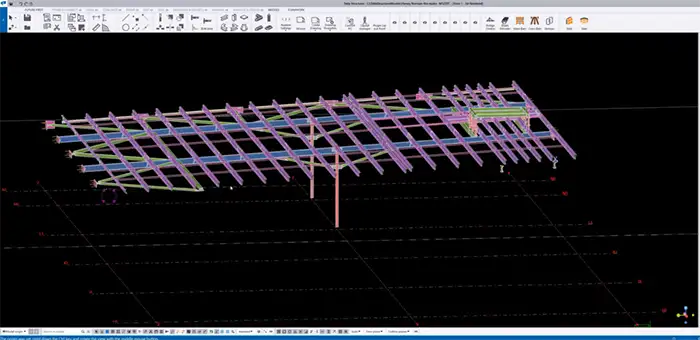
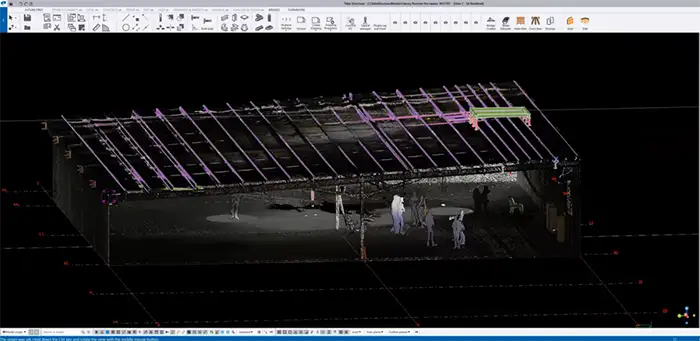
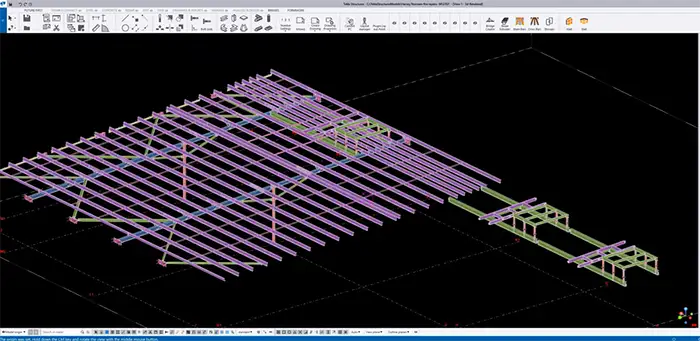
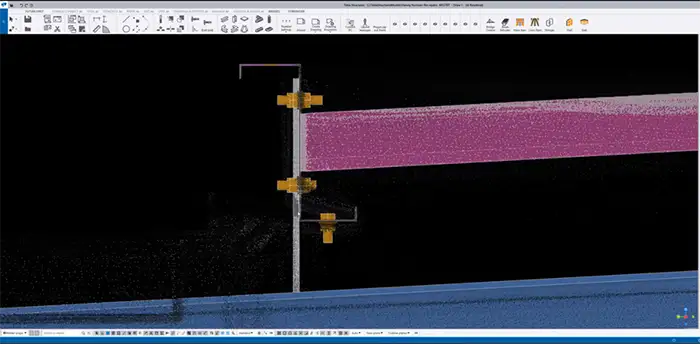
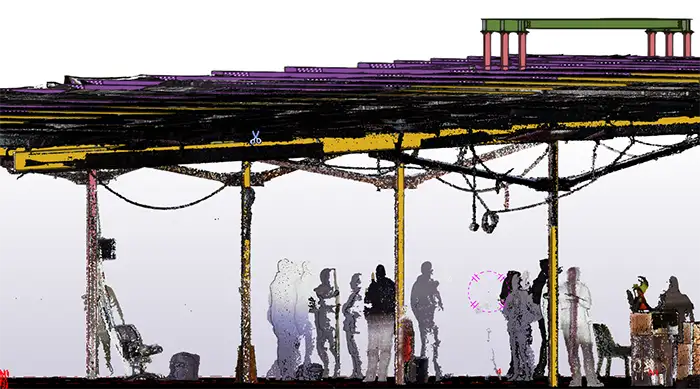
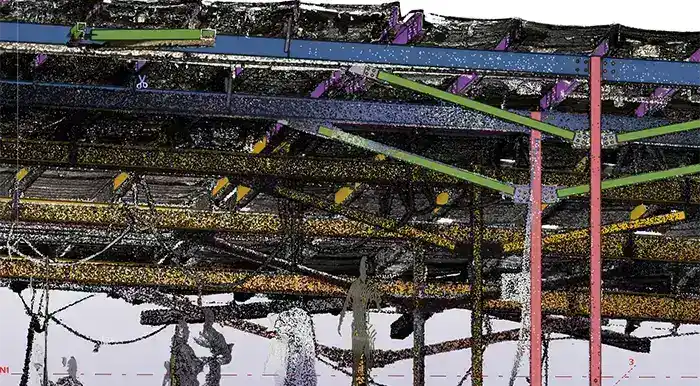
One of the strongest examples of Future First Drafting’s scan-to-model workflow came from a fire repair project in Whyalla, where part of an existing building had been damaged and the back section needed to be replaced. Rather than relying only on supplied dimensions, Lee scanned the structure with a Trimble X-series scanner and brought the point cloud data into his modelling workflow.
The scanner gave Lee visibility of the existing purlins, rafters and site conditions, including where parts of the structure had sagged by around 30 mm. It also revealed that the building was approximately 70 mm smaller than the dimensions originally supplied. Without that scan data, steel members could have been fabricated too long and arrived on site unable to fit correctly.
By identifying the discrepancy early, Lee was able to adjust the model before fabrication, align new steelwork to existing conditions, and reduce the likelihood of costly issues during installation.
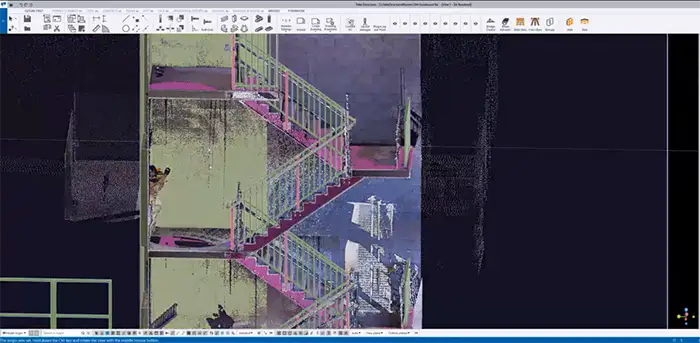
For Future First Drafting, point cloud data often becomes the reference point that helps guide the model. Lee may begin with a simple stick model, visit site to capture scan data, then bring that information back into Tekla Structures to align the model with real-world conditions.
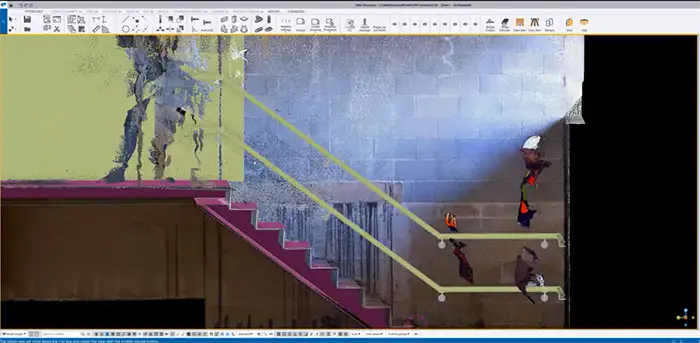
This is especially valuable on projects where existing conditions are irregular, damaged or difficult to measure manually. In stairwell and handrail applications, for example, the scanner allows Lee to see variations in step positions, slabs, chamfers and landing levels that may not be obvious from traditional measurements alone.
On one stair project, scanning revealed an area that was 30–35 mm lower than expected. While traditional methods may eventually have detected that something was not right, the scan provided more complete context and helped Lee make informed modelling decisions from the outset.
The Trimble scanner has reduced Lee’s reliance on time-consuming manual measuring. While he still takes check measurements where needed, much of the site information required for modelling can now be captured through scanning.
For straightforward scans, Lee can complete each scan in only a few minutes, depending on the settings used. On a stair and balustrade project, he estimated that scanning four main areas took around two hours, compared with a full day of manual measuring and the possibility of needing to return to site.
That efficiency has a direct impact on project viability. Jobs that would previously have involved extensive manual measuring, additional site visits or too much uncertainty can now be completed with greater confidence and less wasted effort.
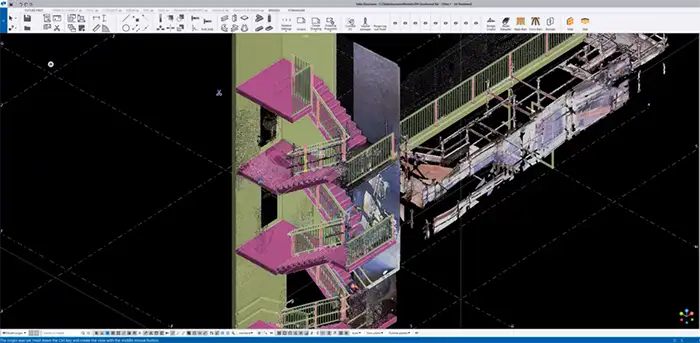
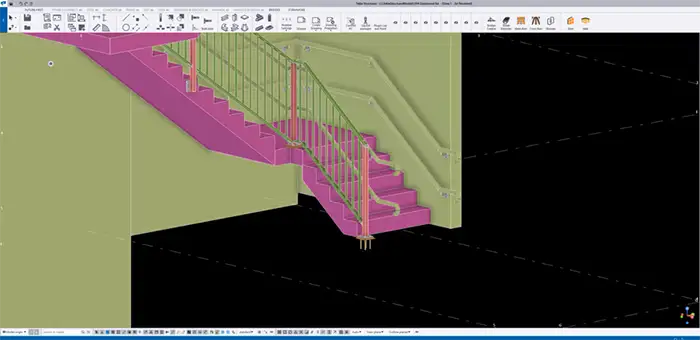
Once the model is developed in Tekla Structures, Future First Drafting can produce the information stakeholders need in a format that suits their role. Clients can receive a 3D model link to understand how the structure is intended to look and fit together, while engineers and project teams may receive IFC files, mark plans, purlin plans, sections and assembly drawings.
Lee also uses model overlays and shared 3D information to coordinate with other project partners. In projects involving precast panels, for example, imported information helps him check connection locations, avoid panel joins, account for chamfers and provide clearer information for review and fabrication.
By combining Tekla model outputs with scan-based as-built information, Future First Drafting can help clients and project stakeholders better visualise the design, review details earlier and make more informed decisions before steel reaches site.
For Lee, the value of scanning is not only in accuracy, but in the efficiencies it creates. It reduces time spent measuring manually, supports a more reliable modelling process, and allows Future First Drafting to take on work that may not have been practical without site scan data.
It also reduces the need to hire external scanning resources. After previously working with hired scanners, Lee decided to purchase his own Trimble scanner, giving him more control over timing, capture quality and how the data is used within his Tekla workflow.
Future First Drafting’s use of Tekla Structures and Trimble scanning reflects a practical approach to steel detailing: capture what is actually on site, model with confidence, and deliver information that fabricators, engineers and installers can use.
For projects involving existing structures, rebuilds, stairwells, handrails or irregular site conditions, scan data helps bridge the gap between design intent and as-built reality. For Future First Drafting, that means fewer assumptions, fewer surprises, and more confidence that what is modelled in Tekla will work when it reaches site.
Fill out the form below to get in contact with one of our sales experts. You can also contact us at 1800 900 272.
Tech Support: If you are looking for Product Tech Support please DO NOT use this form. Please visit our Support Page to contact us for support questions.

One of our specialists will contact you within 1 business day.

Advice from experienced professionals.

Work with a team that understands your project needs.
AUTHORISED PARTNERS


COMPANY
LEGAL
ADDITIONAL
HELP
